Yala
Sri Lanka's best-known national park, where dry scrub, lagoons and rock outcrops hold leopards, sloth bears, elephants and a lot of birds.
Yala National Park covers close to 1,000 square kilometres of the south-east coast, spread across the Southern and Uva provinces. It was declared a national park in 1938 and is the country's second largest. Most visitors base themselves in Tissamaharama (Tissa) or along the road to the Palatupana gate, and go into the park by licensed safari jeep.
The draw is the leopard. Block 1, the most visited section, has one of the highest leopard densities recorded anywhere, and that is exactly why it gets crowded. Elephants, sambar and spotted deer, wild boar, mugger crocodiles, water buffalo and a long list of birds make a drive worthwhile even when the cats stay hidden.
Yala suits travellers who are happy with early starts, heat and dust, and who treat wildlife as something to watch rather than tick off.
Things to do in Yala
- 01
Take a morning jeep safari in Block 1
Block 1, entered from Palatupana or Katagamuwa, has the most leopard records and the classic Yala scenery of rock outcrops, waterholes and coastal scrub. Morning drives start at first light, when animals are most active and the heat has not built. It is also the busiest section, so expect other jeeps at any sighting.
- 02
Try a quieter block from the Galge side
The Galge entrance, on the Buttala–Kataragama road, gives access to the less-visited blocks further inland. Wildlife is more spread out and sightings are harder won, but you will often share the tracks with far fewer vehicles. It is also a useful fallback if Block 1 is closed.
- 03
Book an afternoon drive as well
Afternoon sessions run into the late light and are a good second attempt if the morning was quiet. Doing one morning and one afternoon drive roughly doubles your time in the park and gives a fairer picture of it. Sightings are never guaranteed on any drive.
- 04
Look for sloth bears and elephants
Sri Lankan sloth bears are shy and usually seen briefly, often around rocky areas or fruiting trees. Elephants are more dependable, particularly near water in the dry months. Keep binoculars handy; many of the best moments are at a distance.
- 05
Visit Kataragama
About 30 minutes north of Tissa, Kataragama is a pilgrimage town sacred to Buddhists, Hindus, Muslims and the indigenous Vedda community. The evening puja at the main shrine is crowded and atmospheric. Dress modestly with shoulders and knees covered, and remove shoes and hats where asked.
- 06
Explore Tissamaharama
Tissa sits beside a large ancient reservoir, Tissa Wewa, which is good for an evening walk and waterbirds. The restored Tissamaharama stupa dates back to the early Ruhuna kingdom. It makes a calmer base than staying right at the park gate.
- 07
Birdwatch at Bundala National Park
Bundala, roughly 30–45 minutes west, is a coastal wetland and Sri Lanka's first Ramsar site. Lagoons hold waders, storks and, in some years, flamingos, with migrant birds most numerous in the northern winter months. It is a good half-day if you want something less crowded than Yala.
- 08
Consider Udawalawe instead, or as well
Udawalawe National Park, about 1.5–2 hours west, is the more reliable park for elephants and is usually less pressured than Yala Block 1. If leopards are not your priority, or you want an alternative during a Yala closure, it is a sound choice.
Book an experience in
Yala.


When to visit Yala
Yala is in the dry zone. The longest dry spell usually runs from around February to September, with heavier rain from roughly October to January under the northeast monsoon. As waterholes shrink later in the dry season, animals concentrate around the remaining water, which can make sightings easier.
The park's busiest blocks are sometimes closed in the late dry season. Historically Block 1 was often shut for part of September and October; in 2026 Blocks 1 and 2 closed from 14 September to 15 October because of drought and heat stress, while the other blocks stayed open, and park bungalows and campsites reopened later. Closures are not on a fixed calendar, so check close to your dates if you plan to visit from August to October.
Heavy rain can also close the park at short notice. Yala shut for several days in March 2025 and again in late November 2025 after Cyclone Ditwah, reopening in stages in early December.
For the whole island, month by month, see the best time to visit Sri Lanka.
How to get to Yala
There is no railway to Yala, so most travellers arrive by road. From Ella the drive down through the hills takes about 2–2.5 hours. From Mirissa or the south coast it is about 2.5–3 hours, and from Colombo about 4–5 hours using the Southern Expressway. Udawalawe is about 1.5–2 hours away.
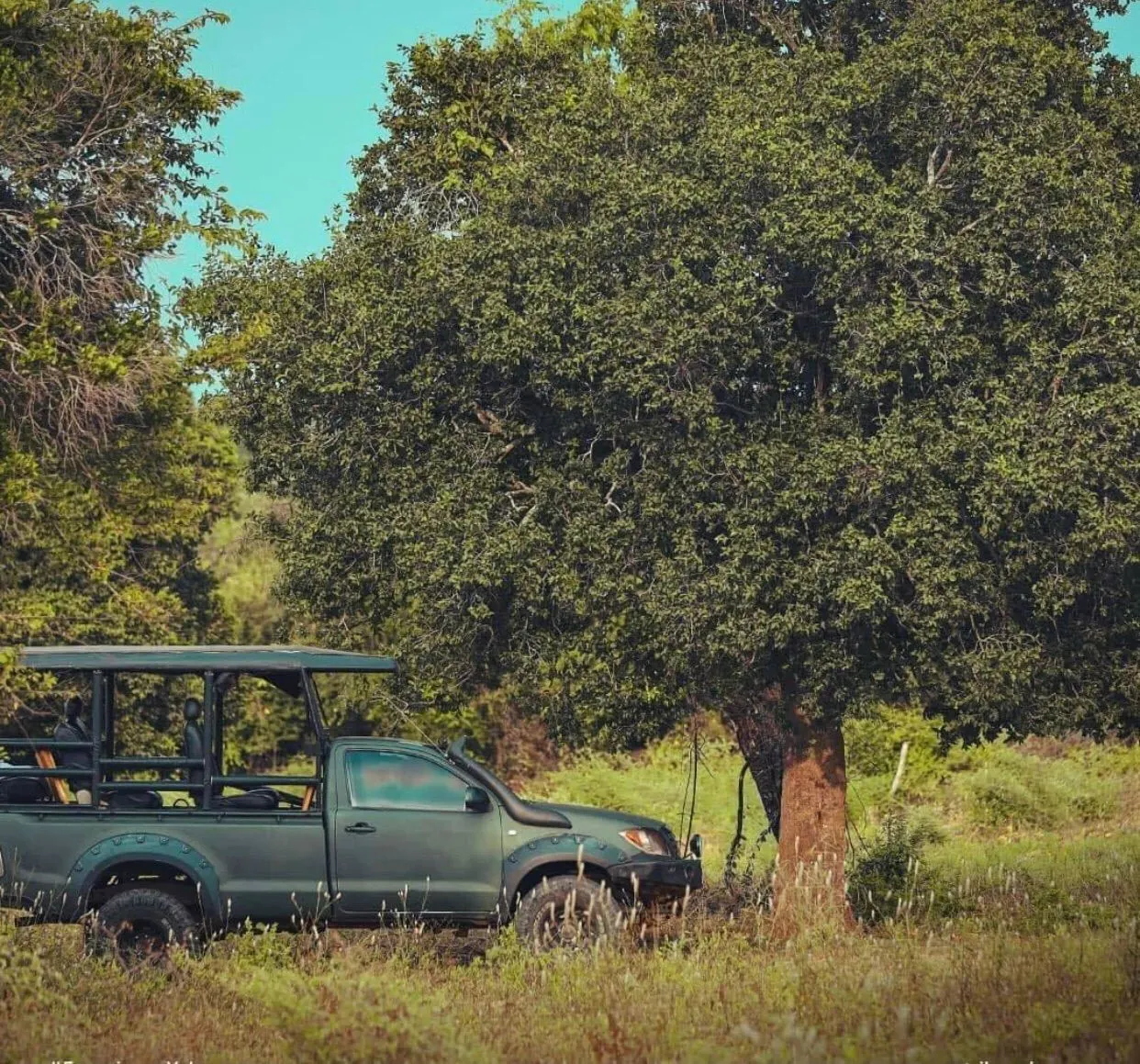
Safari jeeps are arranged locally and collect you from your hotel before dawn for morning drives. On a Roamify trip your SLTDA-licensed chauffeur guide drives you to Tissa or the park area; the safari itself is in a licensed park jeep with its own driver, as private cars are not used inside.
Where it fits in a trip
Yala usually comes after the hill country or the south coast. A common shape is Kandy, Nuwara Eliya, Ella, then down to Yala for one or two nights before heading west to Mirissa or Galle, or the reverse.
Arugam Bay on the east coast is about 3–4 hours away, so Yala can also link the south to the east in the middle of the year, when the east coast is in season. Udawalawe fits neatly between Ella or the south coast and Yala if you want two different parks.
Browse Sri Lanka itineraries to see Yala in a full route.
Yala travel tips
- Check the current status of Block 1 if you are travelling between August and October; if it is closed, the Galge-side blocks or Udawalawe are the usual alternatives.
- Ask for a driver who keeps a respectful distance, switches off the engine at sightings and does not race between radio calls. Licensed drivers can lose their permits for speeding or crowding animals, so you are within your rights to ask them to slow down.
- Bring a hat, sunscreen, water, a light scarf for dust and binoculars. Mornings can be cool in an open jeep before the sun is up.
- Wear muted colours, keep voices low and stay seated in the vehicle at all times; getting out is not allowed except at designated points.
- Entry fees, session times and jeep arrangements change; check current details locally rather than relying on old blog posts.
Yala: common questions
Will I see a leopard in Yala?
Leopard sightings are not guaranteed in Yala, even in Block 1 where their density is highest. Many visitors see one on a morning or afternoon drive, but plenty do not. Doing two drives and staying patient at waterholes improves your chances.
Is Yala National Park closed in September and October?
Parts of Yala are sometimes closed in the late dry season, but not on a fixed schedule. In 2026 Blocks 1 and 2 closed from 14 September to 15 October because of drought, while other blocks stayed open. Check the current status before booking a visit between August and October.
Is a morning or afternoon safari better in Yala?
Morning drives start at first light, when it is cooler and many animals are active, so they are the more popular choice. Afternoon drives can be just as productive and the late light is good for photography. If you have time, do one of each.
How many days do you need in Yala?
One night is enough for a single safari, but two nights let you do a morning and an afternoon drive without rushing and add Kataragama or Bundala.
Is Yala too crowded?
Block 1 can be very busy, especially in peak holiday periods, and jeeps often bunch up at leopard sightings. Quieter blocks reached from the Galge entrance, or nearby Bundala and Udawalawe, offer a calmer experience with fewer vehicles.
Yala or Udawalawe: which is better?
Yala is the better choice for leopards, mixed landscapes and sloth bears, but it is busier. Udawalawe is the more dependable park for elephants and is usually less crowded. Many travellers visit both on the same route.
Take Yala
with you.
Pick a ready-to-go itinerary and tell us your dates. A concierge sets the hotels, the driver and the order of the days, and quotes the whole thing.