Trincomalee
A deep natural harbour, long pale beaches and a clifftop Hindu temple, at their best when the rest of the island is wet.
Trincomalee, usually shortened to Trinco, sits on one of the largest natural harbours in Asia on Sri Lanka's north-east coast. The town itself is busy and workaday, with a fort, a naval presence and a mix of Tamil, Muslim and Sinhalese communities. Most travellers stay a few kilometres north on the beaches of Uppuveli or Nilaveli.
The main reasons to come are the sea and the season. From roughly May to September, when the south-west coast is often rough, the water here is generally calmer and clearer. That makes Trinco the natural beach stop for a mid-year trip, with snorkelling at Pigeon Island and boat trips to look for dolphins and whales.
It suits couples, families and anyone who wants a few slower days after the Cultural Triangle; it is quieter and less built-up than the south coast.
Things to do in Trincomalee
- 01
Snorkel at Pigeon Island National Park
About a kilometre off Nilaveli, this small marine national park protects a coral reef where blacktip reef sharks and sea turtles are often seen in the shallows. Boats leave from Nilaveli beach after you buy a park ticket from the wildlife office there. Landings depend on sea conditions, and the park is closed to visitors during the northeast monsoon.
- 02
Spend time on Nilaveli and Uppuveli beaches
Uppuveli, closer to town, has more guesthouses and places to eat; Nilaveli, further north, is longer, emptier and closer to Pigeon Island. In season the sea is usually gentle enough for swimming, but currents can change, so swim where locals do and ask at your hotel.
- 03
Visit Koneswaram Temple on Swami Rock
This Hindu temple to Shiva stands on a cliff above the sea at the end of the Fort Frederick headland, on a site with a long and much-disputed history. Cover shoulders and knees, remove shoes before entering, and follow any instruction from temple staff. Late afternoon is a pleasant time, with views over the ocean.
- 04
Walk through Fort Frederick
The road to Koneswaram passes through Fort Frederick, first built by the Portuguese in the 17th century and later held by the Dutch and British. It is still a military area, so some parts are off-limits and photography may be restricted. Spotted deer wander freely around the grounds.
- 05
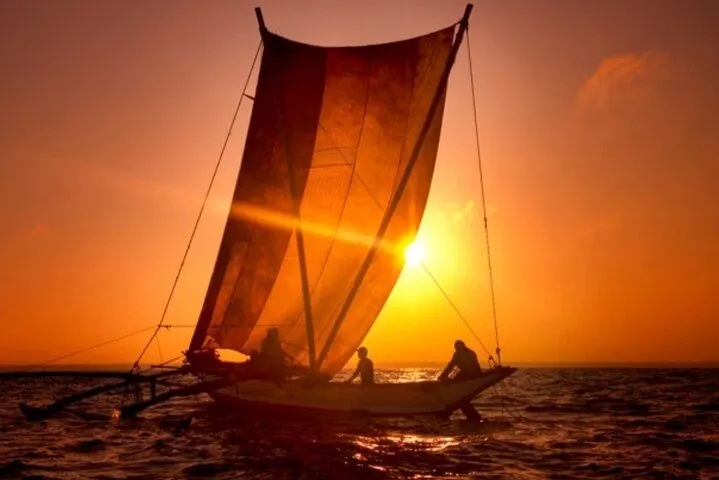
Go dolphin and whale watching
Boats run from the Trincomalee and Nilaveli area during the season, roughly May to October by most accounts. Spinner and bottlenose dolphins are the more frequent sightings, while blue and sperm whales are possible but far from certain. Choose an operator who keeps a respectful distance and does not chase animals.
- 06
Learn to dive or take a scuba trip
Dive centres around Uppuveli and Nilaveli run introductory dives and reef trips in season. Conditions vary week to week, and most close or scale down in the monsoon.
- 07
Stop at the Kanniya hot wells
A short drive inland, Kanniya has seven small wells, each at a slightly different temperature, set in a walled compound with religious significance. It is a quick, low-key stop rather than a destination in itself. Dress modestly.
- 08
Pay respects at the Trincomalee War Cemetery
On the road to Uppuveli, this quiet Commonwealth war cemetery holds graves from the Second World War, when Trincomalee was an important naval base.
- 09
Swim at Marble Beach
South of town near China Bay, Marble Beach is a sheltered cove managed by the Sri Lanka Air Force, with clear water on calm days. It is popular with local families at weekends and holidays.
Book an experience in
Trincomalee.



When to visit Trincomalee
The east coast runs on the opposite rhythm to the south and west. The calmer, drier season is usually from about May to September, with April and October as shoulder months. From around October or November to January the northeast monsoon brings heavy rain, rough seas and boat trips that do not run; Pigeon Island closes to visitors during this period.
It is hot from May to August, often well into the 30s Celsius in the middle of the day, so plan snorkelling and sightseeing for mornings and late afternoons. Trincomalee district was among the areas affected by flooding when Cyclone Ditwah hit Sri Lanka in late November 2025, which is a reminder that late-year travel here carries real weather risk.
For the whole island, month by month, see the best time to visit Sri Lanka.
How to get to Trincomalee
Most travellers arrive by road from the Cultural Triangle. From Sigiriya or Dambulla the drive takes about 2–2.5 hours, from Habarana about 1.5–2 hours and from Anuradhapura about 2–2.5 hours. From Kandy allow about 4–5 hours, and from Colombo about 5–6 hours. Pasikudah, further down the east coast, is about 2–2.5 hours south.
Trincomalee also has a railway connection to Colombo, including an overnight service; times and frequency change, so check current schedules with Sri Lanka Railways. On a Roamify trip you travel in a private air-conditioned vehicle with an SLTDA-licensed chauffeur guide, who can also take you up to Nilaveli for the Pigeon Island boats.
Where it fits in a trip
Trinco is usually the beach finish, or a mid-trip break, after the Cultural Triangle. A common mid-year route is Colombo or Negombo, then Anuradhapura or Sigiriya and Dambulla, then two or three nights in Trincomalee before heading to Kandy and the hill country.
It also links north to Jaffna and south to Pasikudah and Arugam Bay, so it works well on an east-coast-focused trip between May and September. From December to March, when the east is unsettled, the south coast is usually the better beach choice.
Browse Sri Lanka itineraries to see Trincomalee in a full route.
Trincomalee travel tips
- Go to Pigeon Island early. Boats get busy from mid-morning, especially at weekends and holidays, and the light and visibility are often better before the wind picks up.
- Pigeon Island has no facilities. Take water and anything else you need, bring all rubbish back with you, never stand on or touch the coral, and do not feed the fish.
- For Koneswaram and other temples, carry a sarong or long trousers and a shirt that covers the shoulders. Shoes come off at the entrance.
- Fort Frederick is an active military area. Obey signs and do not photograph military installations or personnel.
- Check whether Pigeon Island and boat trips are running before you go in April, October or November, when conditions are less predictable.
Trincomalee: common questions
What is the best time to visit Trincomalee?
The best time to visit Trincomalee is usually from May to September, when the east coast is drier and the sea is calmer. April and October can also be good. From around October or November to January the northeast monsoon brings rain and rough seas.
Is Pigeon Island open all year?
No. Pigeon Island National Park closes to visitors during the northeast monsoon, roughly from late in the year into the early months of the next, and landings can be stopped on any day if the sea is rough. Check current status with the Department of Wildlife Conservation office at Nilaveli before you go.
Can you see whales in Trincomalee?
Whales can be seen off Trincomalee during the east-coast season, roughly May to October, but sightings are never guaranteed. Dolphins are seen more often than whales. Blue whales are more reliably seen off Mirissa on the south coast from around November to April.
Is Nilaveli or Uppuveli better?
Uppuveli is closer to Trincomalee town and has more guesthouses, restaurants and dive centres within walking distance. Nilaveli is quieter, with a longer and emptier beach, and is the departure point for Pigeon Island boats. Choose Uppuveli for convenience and Nilaveli for space.
What should I wear to Koneswaram Temple?
Wear clothing that covers your shoulders and knees, such as a shirt with sleeves and long trousers or a long skirt or sarong. Shoes must be removed before entering the temple. Follow any additional instructions from temple staff.
How many days in Trincomalee is enough?
Two or three nights is enough for most travellers, allowing time for Pigeon Island, Koneswaram and Fort Frederick and some beach time. Add a night if you want a whale-watching trip or a few dives.
Take Trincomalee
with you.
Pick a ready-to-go itinerary and tell us your dates. A concierge sets the hotels, the driver and the order of the days, and quotes the whole thing.