Mirissa
A curved bay on the south coast, best known for blue whales offshore in season, with surf, coves and a palm-topped headland close by.
Mirissa is a small fishing town on Sri Lanka's southern coast, about an hour east of Galle. Its main bay is a crescent of sand backed by guesthouses and restaurants, with a fishing harbour at one end and a palm-covered headland, Coconut Tree Hill, at the other.
Most people come for the sea. Deep water lies close to this stretch of coast, bringing feeding whales within reach of day boats, and Mirissa is the main whale-watching base in the south. The rest of the time goes on the beach, the small coves nearby, or surfing at Weligama.
It suits couples, friends and families after a few slow beach days, wildlife fans who are realistic about the sea, and beginner surfers. It is busy in peak season.
Things to do in Mirissa
- 01
Go whale watching, responsibly
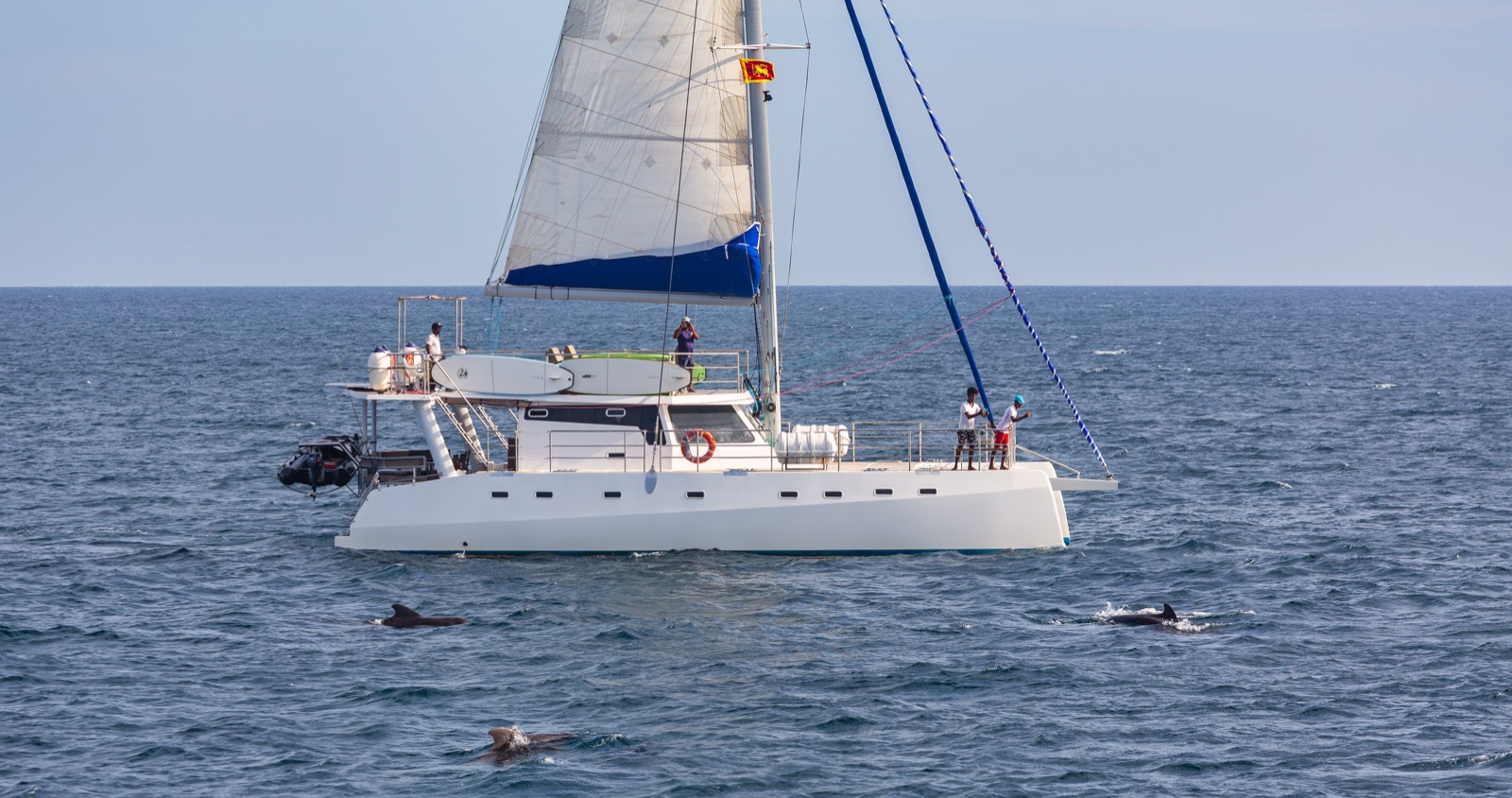
Boats leave Mirissa harbour early and spend several hours at sea; blue whales are the main hope, with sperm whales and dolphins also seen. Sightings are frequent in season but never guaranteed. Under Sri Lanka's sea mammal regulations, boats should stop about 100 metres from whales, and swimming with whales is not allowed without special permission from the Department of Wildlife Conservation. Choose an operator that keeps its distance, carries life jackets for everyone and does not chase the animals, and walk away from anyone selling a swim-with-whales trip.
- 02
Climb Coconut Tree Hill
This small headland just east of the main beach, covered in tall coconut palms, is a popular spot at sunrise and sunset. It is privately owned land that the public has been allowed to visit, so access could change. Go early if you want it without a queue for photographs.
- 03
Spend a day on Mirissa beach
The main beach has sunloungers, cafés and a long sandy curve that is usually calm enough for swimming between December and April. Parrot Rock, a small outcrop near the shore, is a well-known lookout. Currents run around rocks and headlands, so swim in the open middle of the bay and stay out when warning flags are up.
- 04
Find Secret Beach
This small cove lies about 2 km from the main beach over a steep hill. A tuk-tuk takes you most of the way, then it is a short walk down a rough path. There are few facilities, so bring water and check the sea before going in; if you snorkel and see turtles, keep your distance.
- 05
Learn to surf at Weligama
Weligama's long, sandy bay, about 10–15 minutes west by road, is one of the best places in Sri Lanka for a first surf lesson, with gentle waves over a sand bottom and plenty of surf schools. The season runs roughly November to April.
- 06
Day trip to Galle Fort
Galle's walled old town is about an hour west. Go in the late afternoon so you can walk the ramparts at sunset before driving back.
- 07
Visit Dondra Head lighthouse
About 30 minutes east, beyond Matara, Dondra Head is the southernmost point of Sri Lanka, marked by a tall Victorian lighthouse. It is an easy stop on the way east towards Tangalle or the national parks.
Book an experience in
Mirissa.
When to visit Mirissa
Mirissa follows the south-coast pattern. The main season runs from about December to April, when the south coast is generally drier with calmer seas. This is the best time for swimming and beginner surfing, and also the busiest.
Whale-watching trips usually run from about November to April. Late November is more reliable than early November, and many operators treat December to March or April as the strongest stretch. Trips are cancelled when the sea is too rough.
From about May to September the south-west monsoon brings rain, strong winds and big surf. Most whale-watching boats stop and the sea is often unsafe for swimming. It is quieter, but plan for rain, not beach days.
For the whole island, month by month, see the best time to visit Sri Lanka.
How to get to Mirissa
From Colombo, the Southern Expressway runs most of the way; allow about 2.5–3.5 hours depending on traffic, a little longer from the airport. From Galle it is about 45 minutes to 1.25 hours along the coast road.
Mirissa has a railway station on the coastal line, but many faster trains do not stop there, so travellers often get off at Weligama or Matara. On a Roamify trip you travel by private air-conditioned vehicle with an SLTDA-licensed, English-speaking chauffeur guide, so the early start for a whale-watching boat is simple to arrange.
Onward: Tangalle about 1–1.5 hours, Udawalawe about 2.5–3 hours, Tissamaharama for Yala about 2.5–3.5 hours, and Ella about 4–5 hours.
Where it fits in a trip
Mirissa usually sits after Galle and before the safari parks of Udawalawe or Yala, or before heading up to Ella; travellers coming down from the hills often reverse this. If whale watching matters most, put Mirissa mid-trip rather than at the very end, so a cancelled boat can be rebooked without touching your flight home.
Browse Sri Lanka itineraries to see Mirissa in a full route.
Mirissa travel tips
- Book whale watching for your first full morning, so there is time to try again if the sea is too rough.
- Eat a light breakfast and take seasickness tablets before a whale trip; the swell is often bigger offshore than it looks from the beach.
- Swim only away from rocks and headlands, and stay out when red flags are up. If a current pulls you out, do not fight it; swim parallel to the shore until free, then head in.
- Avoid sea swimming between about May and September, when the south-west monsoon makes this coast dangerous.
- Skip any operator advertising swimming with whales; it is not permitted without special Department of Wildlife Conservation permission and stresses the animals.
- Coconut Tree Hill and Secret Beach are busiest around sunset; go at sunrise for quiet.
Mirissa: common questions
When is whale watching season in Mirissa?
Whale-watching boats from Mirissa usually operate from about November to April, when the sea on Sri Lanka's south coast is calmer, and many operators consider December to March or April the strongest period. Sightings are frequent in season but never guaranteed, and trips are cancelled when the sea is too rough.
Is whale watching in Mirissa ethical?
It can be, but standards vary. Sri Lankan regulations require boats to keep about 100 metres from whales, and swimming with whales is banned without special permission from the Department of Wildlife Conservation. Choose an operator that keeps its distance, carries life jackets and does not chase animals, and avoid swim-with-whales trips.
Is it safe to swim in Mirissa?
Swimming in Mirissa's main bay is usually fine between December and April if you stay in the open middle of the beach, away from rocks and headlands where rip currents form. From about May to September the south-west monsoon makes the sea rough and dangerous. Always check warning flags and lifeguard advice.
How many days in Mirissa is enough?
Two or three nights suits most travellers: enough for a whale-watching trip with a spare morning if the sea cancels it, Coconut Tree Hill and Secret Beach, and a surf lesson at Weligama or a day trip to Galle.
Is Mirissa worth visiting during the monsoon?
From about May to September the south-west monsoon brings rain, strong winds and rough seas to Mirissa. Most whale-watching boats stop and sea swimming is often unsafe, although the town is quieter. If beaches are the priority in those months, Sri Lanka's east coast is usually the better choice.
How far is Mirissa from Galle?
Mirissa is roughly 35 km east of Galle along the coast road, usually about 45 minutes to 1.25 hours depending on traffic. It is an easy day trip in either direction.
Take Mirissa
with you.
Pick a ready-to-go itinerary and tell us your dates. A concierge sets the hotels, the driver and the order of the days, and quotes the whole thing.